

Walking Alongside Indigenous Peoples Who Are Seriously Ill: Education for Community Caregivers
Aaniin, ᐋᓃ, boozhoo, čuu, gwe’, hadih, hóʔą, kalhwá7al̓ap n̓it, oki, she:kon, tansi, taanishi, tânisi, tân'si, ʔéx kʷ n̓, K̓alhwá7acw, tunngasugit, wéytk, ʔaʔaa, Greetings
Supporting Family & Community Caregivers
Caring for someone with a serious illness can be both rewarding and challenging. It is an act of kindness and compassion and reflects a strong connection to family and community. In many Indigenous communities, caregiving is a collective responsibility rooted in kinship. It is guided by Indigenous Knowledges and values that have supported Nations for generations.
Family and community caregivers carry heavy responsibilities, often without access to information, resources, or support, especially those that reflect Indigenous cultures and values.
In response to this need, the Indigenous Peoples’ Health & Aging Division at the Centre for Education and Research on Aging & Health, Lakehead University, created the Walking Alongside Indigenous Peoples Who Are Seriously Ill initiative – an education initiative to support family and community caregivers and to help health and social care providers deliver community-based education.
This initiative aims to uplift caregiver voices, strengthen their capacity to provide care, and honour their cultural identity. May this experience remind them to move gently, be guided by relationship, and hold gratitude for being invited into people’s sacred space. We are honoured to walk alongside you.
Overview of the Education
Throughout this site, caregivers will find culturally relevant resources for family and community members, as well as health and social care providers in Indigenous communities. These resources are grounded in a wholistic understanding of wellness and caregiving, recognizing a person’s spiritual, emotional, mental, and physical needs.
The Walking Alongside Indigenous Peoples Who Are Seriously Ill initiative includes the following components:
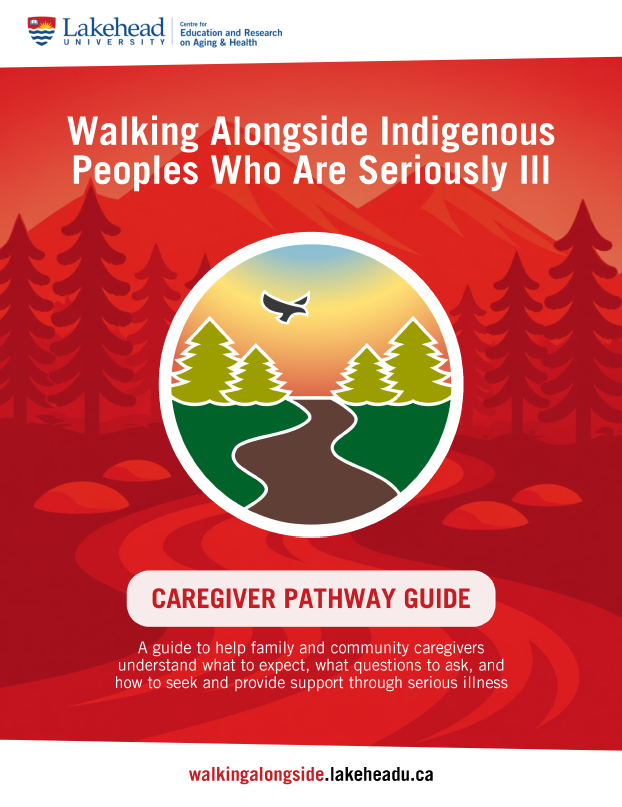
- The Caregiver Pathway Guide – A practical, step-by-step guide that helps family and community caregivers understand what to expect, what questions to ask, and how to seek support throughout the journey of serious illness.
- The Resource Website (You are Here!) – A collection of accessible presentations with detailed speaker notes, educational and skills-training videos, information pamphlets, fact sheets, and activities to support caregivers as they journey with people who are seriously ill. These resources are organized to align with each section of the Caregiver Pathway Guide, making it easy to find tools that support each part of the journey.
- The Building the Circle of Care Training – A workshop designed to help support health and social care providers in better understanding the caregiver experience and strengthening how they share education and support with families and caregivers in their communities.
Each of these three components connects to the others, offering support at different points along the journey and helping caregivers and providers feel more informed, prepared, and supported.
Navigating the Caregiver Pathway
The Walking Alongside Indigenous Peoples Who Are Seriously Ill: Caregiver Pathway Guide provides caregivers with step-by-step guidance through the person’s journey, from diagnosis to supporting their return to the spirit world. The Caregiver Pathway Guide follows a wholistic understanding of wellness, emphasizing that all parts of our being and our relationships are interconnected when caring for someone with a serious illness.
The Caregiver Pathway Guide is organized into six sections: Understanding Illness, Making Wishes Known, Creating a Plan, Providing Care, Honouring the Caregiver, and Supporting the Journey to the Spirit World. The sections include resources to assist with each aspect of the journey. We encourage you to use the Pathway Guide, along with any tools and resources in each section, as you navigate your caregiving journey.
You can browse the resources within each section as needed, or search the Resource Library if you’re looking for something specific. Explore this site in the way that feels most helpful to you.
Acknowledgements
We extend our deepest gratitude to the Elders, Knowledge Carriers, and members of the Indigenous Guidance Circle who generously shared their time, wisdom and lived experiences to guide the development of this work. Your teachings, stories, and insights were foundational to this process and its content.
We also recognize the communities, Nations, and organizations that have created the resources linked throughout this website. Their leadership, expertise, and commitment to supporting caregivers make this shared knowledge possible. We encourage everyone to explore their work and learn more about the services they provide.